
















Russia Overtakes Ukraine as India’s Top Sunflower Oil Supplier
In a dramatic shift in global edible-oil trade, Russia has replaced Ukraine as India’s largest supplier of sunflower oil, with imports rising nearly twelve-fold in four years. The change is attributed to port access, pricing and war-driven trade diversions.

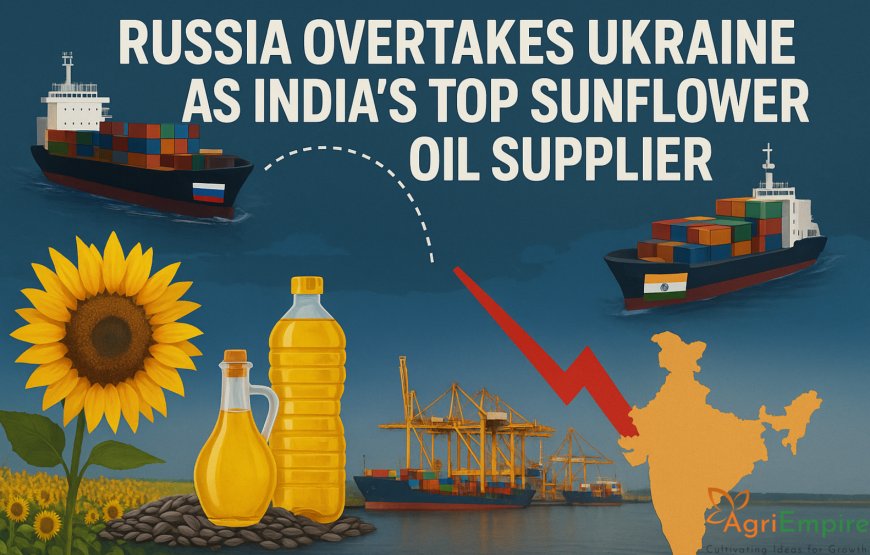
Russia has emerged as India’s largest supplier of sunflower-oil, a notable reversal of earlier trade patterns which saw Ukraine in that role. According to industry and customs data, India’s imports of Ukrainian sunflower-oil have been largely diverted to Europe due to the war and logistical constraints, while Russian exports to India surged nearly twelve-fold from about 1.75 lakh tonnes in 2021 to approximately 2.09 million tonnes in 2024.
The shift is driven by multiple factors. Russian producers benefit from reliable seaport access despite the war, competitive pricing, and India’s strong demand for edible-oils given its limited domestic sunflower-oil production (below 5 % of consumption). Industry insiders highlight that Russia’s share rose from roughly 10 % of India’s sunflower-oil imports in 2021 to around 56 % in 2024.
On the Indian side, edible-oil markets and policy makers are watching this change with interest. While Russian supplies have helped India secure a stable source, the steep price increases this year—approximately a US$150/ton premium over alternatives—raise concerns about inflationary pressures and supply-chain dependencies.
Global implications are significant. Ukraine’s exports have been constrained by Black Sea access issues, pushing it to redirect to Europe and reducing its availability in Asia. Russia’s gaining foothold in India underscores how geopolitical conflict can rapidly reshape agricultural trade flows and value chains. Analysts expect Russia’s share to remain at about 55-60% despite a projected 13% Fall in overall Indian imports this year.
For farmers and agribusinesses worldwide, the development signals both risk and opportunity. Oil-seed producers in other countries may face heightened competition, while consumers and importers must account for supply concentration. India’s move signals the need for diversified sourcing and strategic reserve planning to buffer against trade disruptions.