


































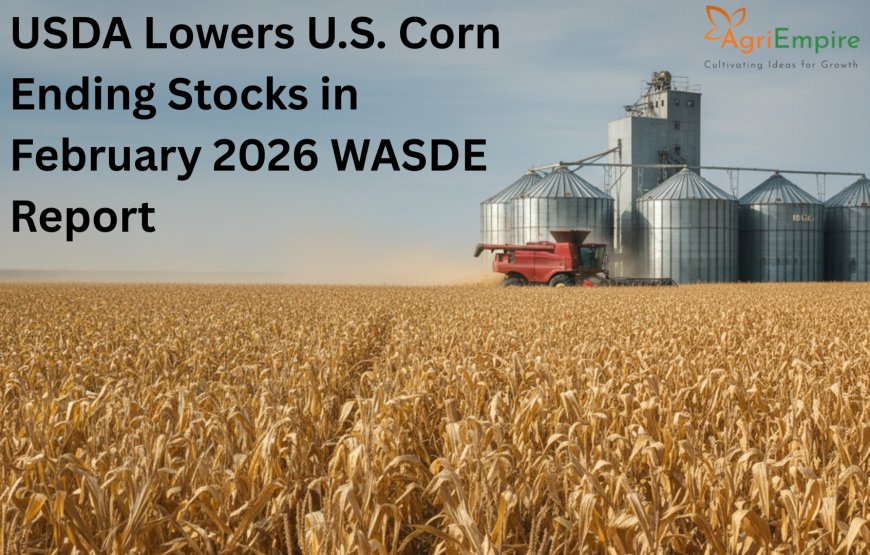
USDA Lowers U.S. Corn Ending Stocks in February 2026 WASDE Report
The United States Department of Agriculture (USDA) has reduced U.S. corn ending stocks in its February 2026 World Agricultural Supply and Demand Estimates (WASDE) report, reflecting stronger exports and tightening global supplies. Soybean stocks remain stable, while wheat estimates were revised higher.

In its February 2026 edition of the World Agricultural Supply and Demand Estimates (WASDE) report, the United States Department of Agriculture announced a reduction in projected U.S. corn ending stocks for the 2025/26 marketing year. The revision reflects stronger-than-anticipated export demand and tightening global corn supplies. Lower ending stocks generally indicate higher demand relative to supply, which can influence domestic and international commodity prices.
Corn remains a critical crop for multiple sectors, including livestock feed, biofuel production, and food processing. When export demand rises, it reduces the volume of grain available at the end of the marketing year. This shift can lead to firmer market prices and influence planting decisions for the upcoming season. Farmers closely monitor WASDE reports, as they provide key insights into global supply-demand balance and pricing trends.
While corn stocks were revised downward, soybean supply projections remained largely unchanged. However, Brazil’s soybean production estimate was increased, reflecting favorable crop conditions and strong output expectations. As Brazil continues to expand its role in global oilseed markets, production shifts there significantly affect international trade flows and pricing dynamics.
Wheat stocks, on the other hand, were adjusted higher in the report. Increased wheat availability may provide some balance in global grain markets, particularly in regions where wheat can substitute for corn in animal feed. These adjustments highlight the interconnected nature of major crops, where changes in one commodity often influence demand and pricing for others.
Overall, the February WASDE update underscores the importance of global demand trends and weather-driven production changes in shaping agricultural markets. For exporting nations, lower corn ending stocks can support stronger prices, while importing countries may face higher feed costs. The report serves as a crucial benchmark for policymakers, traders, and farmers worldwide as they plan production, procurement, and trade strategies in an evolving global food system.