


























Kolhapur Root Crop Expo Unveils 'Future Crops': 250+ Rare Tubers Showcased for Medicinal and Edible Innovation
A unique exhibition in Kolhapur recently showcased over 250 varieties of rare root and tuber crops, focusing on their medicinal properties and potential as alternative climate-resilient crops. Organized by Nature Ankur and NGO Compassion 24, the event served as a knowledge hub for researchers and progressive farmers.

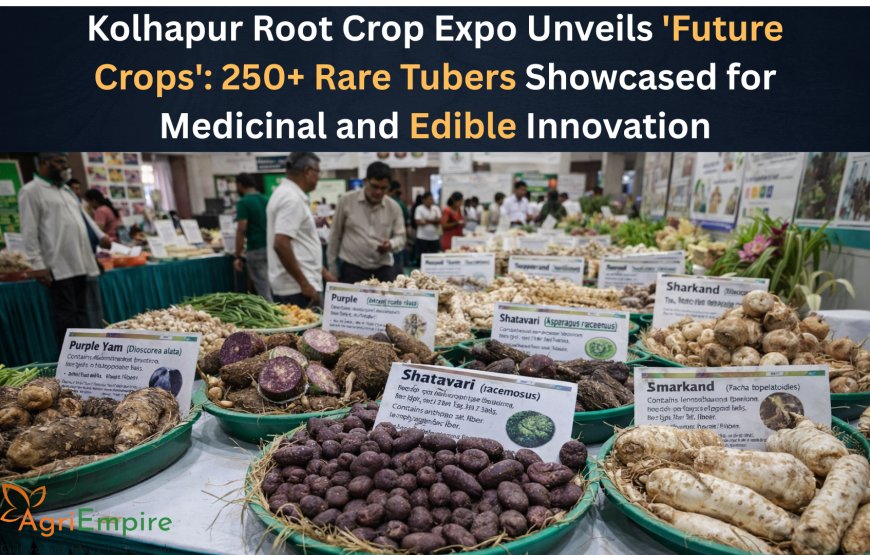
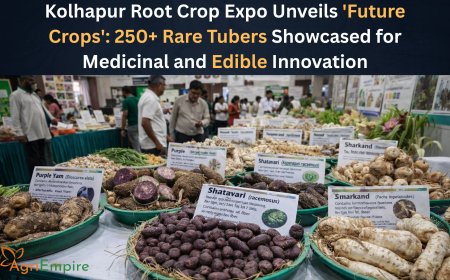
In an effort to bridge the gap between traditional tribal knowledge and modern agricultural science, a landmark Root and Tuber Crop Exhibition was recently held at Shahaji College, Kolhapur. This fourth edition of the expo brought together a "treasure trove of knowledge," featuring over 250 varieties of rare, medicinal, and edible tubers collected from across Maharashtra, Karnataka, Kerala, and Odisha.
The exhibition was a significant platform for Agricultural Innovation, where each tuber was displayed with its scientific name, cultivation methods, and nutritional profile. Experts like senior botanist Dr. Madhukar Bachulkar emphasized that many of these root crops—such as Dioscorea species, Amarkand, and Safed Musli—are not only rich in minerals and immunity-boosting properties but also require minimal water and low investment. This makes them ideal "alternative crops" for farmers facing climate instability.
Highlights of the research-focused display included:
-
Diversity in Staples: 12 varieties of sweet potatoes, 30 types of turmeric (including rare black and forest turmeric), and 16 types of ginger (white, blue, and yellow).
-
Rare Species: Rare tubers like Varahkand, Nagarkon, and aerial potatoes (Hawaai Batata) that grow in leaf axils.
-
Medicinal Powerhouses: Detailed information on Shatavari, Bhuikohla, and Kalanchoe, which are highly valued in Ayurvedic medicine for treating various ailments and boosting physical strength.
The event saw enthusiastic participation from researchers, students, and farmers looking for sustainable crop alternatives. The organizers aim to promote the commercial cultivation of these "jungle crops" to provide a new revenue stream for farmers while preserving the biodiversity of Indian flora. By introducing American taro and Chinese potatoes alongside indigenous varieties, the expo highlighted the global potential of tuber-based food systems.
As modern lifestyles lead to a decline in traditional food consumption, this exhibition served as a critical reminder of the nutritional and economic value hidden beneath the soil. For the next generation of farmers, these "Future Crops" represent an innovative pathway to resilient and profitable agriculture.