
















Global Trade Shift: China Suspends Tariffs on Canadian Farm Imports to Offset Global Market Instability
In a major geopolitical maneuver, China has officially suspended 100% tariffs on key Canadian agricultural exports, including canola meal and peas, starting March 1, 2026. This move aims to secure more stable food supply chains amid rising trade tensions between the United States and other global powers.

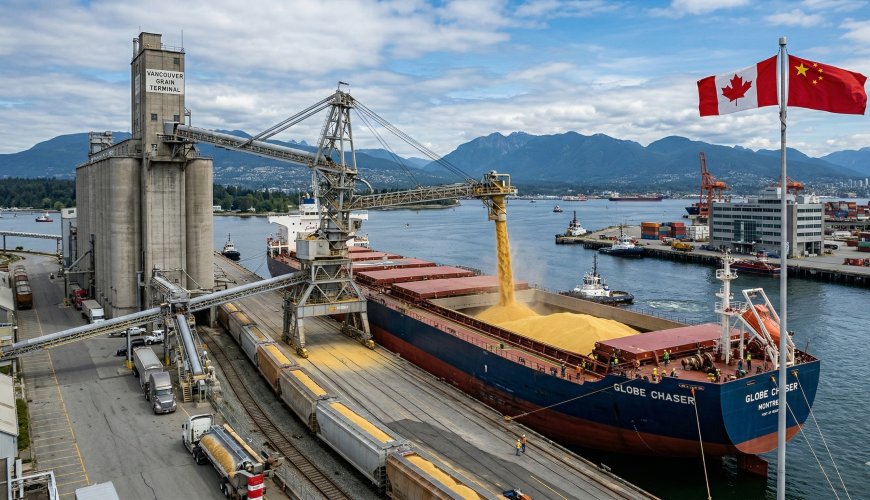
The international agricultural market is witnessing a significant reorganization as China officially begins the suspension of heavy tariffs on major Canadian agricultural commodities today, March 2, 2026. This decision follows a high-stakes diplomatic mission by Canadian Prime Minister Mark Carney to Beijing, where an agreement was struck to halt 100% tariffs on canola meal and peas, as well as 25% levies on seafood imports like lobster and crab. These suspensions are slated to remain in effect until the end of 2026, providing a much-needed window of predictability for North American producers who have faced years of volatility.
This trade easing comes at a critical time as global agricultural prices face pressure from a strengthening U.S. dollar and shifting trade policies under the current U.S. administration. By opening its doors wider to Canadian exports, China is positioning itself as a more reliable economic partner for Western nations, contrasting with the increasingly protectionist stance seen in Washington. For Canadian farmers, particularly those in the Prairies, this move has already begun to lift local market sentiment, with canola prices reportedly rising by nearly a dollar per bushel in anticipation of increased demand.
However, the deal is not without its complexities, as it involves a "quid pro quo" related to the automotive sector. In exchange for the agricultural concessions, Canada has agreed to import up to 49,000 Chinese electric vehicles annually at a significantly reduced tariff rate of 6.1%. This linkage between food exports and green technology highlights the new era of "integrated diplomacy," where agricultural access is used as a bargaining chip for broader industrial and environmental goals.
Despite the positive news for meal and pea growers, some sectors remain in a state of uncertainty. The Chinese finance ministry’s announcement notably excluded canola seeds and pork—two of Canada’s most vital agricultural exports. While industry experts remain optimistic that a separate anti-dumping probe into canola seeds will conclude favorably later this month, the exclusion of these products means that many family farms are still operating with significant risk.
As global markets adjust to this new China-Canada axis, other major players like Russia and Israel are also realigning their strategies. Israel, for instance, is currently proposing concessions to the U.S. to boost wheat imports while simultaneously raising levies on traditional suppliers like Russia. This interconnected web of tariffs and trade deals confirms that 2026 will be a year defined by agricultural regionalism, as nations seek to buffer their food security against the backdrop of escalating geopolitical tensions.