










Maharashtra Budget 2026-27: AI-Driven Agriculture Takes Center Stage Amid Slowing Growth Forecast
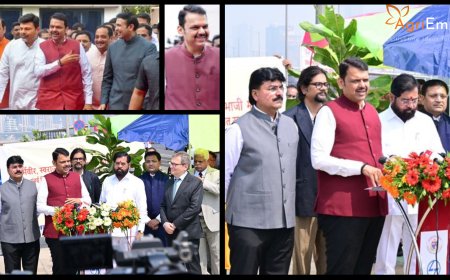
Chief Minister Devendra Fadnavis presented the Maharashtra Budget today, focusing on a historic Agriculture AI Policy (2026-2029) to combat climate instability. Despite a projected state economic growth of 7.9%, the agriculture and allied sector is expected to grow by only 3.4% this year due to unseasonal rains and structural deficiencies.

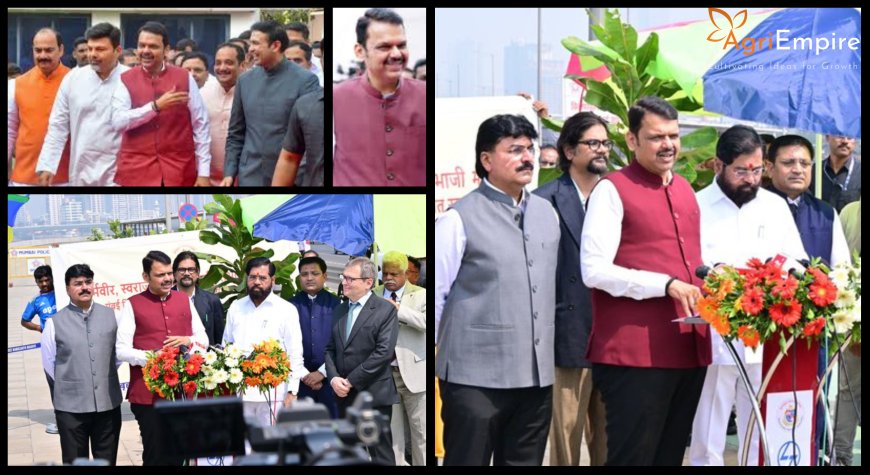
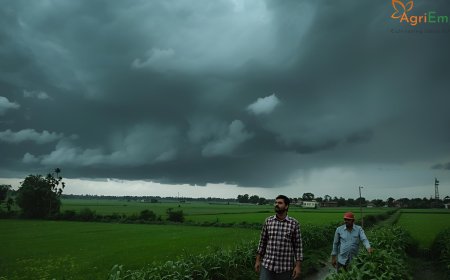
The Maharashtra Budget for 2026-27, presented today by Chief Minister Devendra Fadnavis, highlights a strategic pivot toward technology to rescue the state’s struggling farm sector. While the state’s overall economy is showing resilience with a projected 7.9% growth rate, the "Agriculture & Allied Activities" segment is a point of concern, expected to grow at just 3.4%. This modest growth follows a year of severe climatic instability, including floods and unseasonal rains that impacted millions of hectares and required over ₹9,400 crore in farmer compensation.
A primary pillar of this year's budget is the Agriculture AI Policy 2026-2029, which seeks to modernize rain-fed farming. By utilizing Artificial Intelligence, the state plans to provide two crore farmers with real-time updates on weather, soil health, and optimal fertilizer usage. The Chief Minister emphasized that AI will play a critical role in reducing input costs, thereby increasing financial stability for small and marginal farmers who represent 78% of the state's agricultural population.
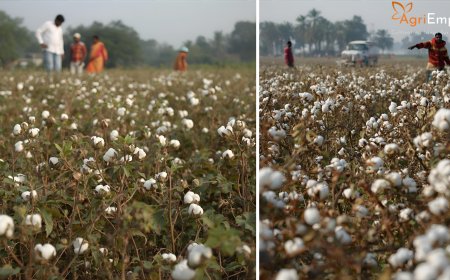
In addition to technology, the government has addressed immediate market pressures by extending the Cotton Procurement deadline to March 15, 2026. This extension aims to shield farmers from price crashes in the open market, where cotton has recently dipped below the MSP of ₹8,110 per quintal. So far, the Cotton Corporation of India (CCI) has purchased 113 lakh quintals in Maharashtra alone, paying out approximately ₹9,020 crore to producers.
The sugar industry is also seeing significant policy shifts. To revive sick cooperative sugar mills, the government has approved a new policy allowing these factories to monetize by-products like molasses and bagasse through BOT (Build-Operate-Transfer) models with private investors. As of early March, 113 sugar mills have concluded their crushing season, with total state production reaching 950.31 lakh quintals. However, a high-level committee has been established to investigate serious violations in the utilization of loans provided to several cooperative factories.
Despite these efforts, farmer leaders remain skeptical about whether AI alone can solve deep-rooted issues like debt and stagnant prices. Advocacy groups are urging the government to strictly enforce the Swaminathan Commission's C2+50 formula for calculating Minimum Support Prices, arguing that without fair remuneration, technological tools will not be enough to end the crisis of farmer suicides in regions like Vidarbha and Marathwada.