
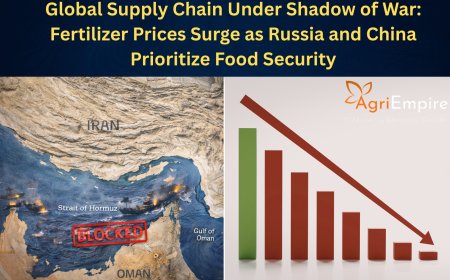




























Global Supply Chain Under Shadow of War: Fertilizer Prices Surge as Russia and China Prioritize Food Security
According to a report released by the Food and Agriculture Organization (FAO) on April 8, 2026, rising conflicts in the Middle East have pushed up fuel and fertilizer prices, threatening global wheat production. Meanwhile, Russia has hiked its export duties, and China has set record grain production targets powered by high-tech integration.

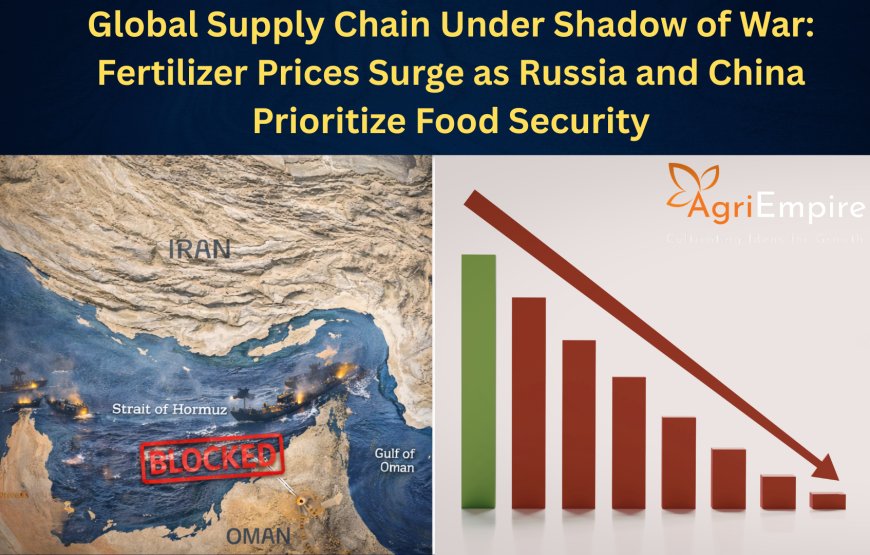
The global agricultural market is witnessing significant volatility today, April 8, 2026. According to the FAO's latest 'Cereal Supply and Demand Brief', global wheat production for 2026 is projected at 820 million tonnes, a 1.7% decrease compared to last year. The primary driver of this decline is the escalating conflict in the Middle East, which has caused a sharp spike in energy and fertilizer costs, hitting countries in the Southern Hemisphere the hardest.
Russia and Ukraine: Russia today increased its wheat export duty to 515.6 RUB per tonne. This move is aimed at curbing domestic inflation and securing national food reserves. Consequently, wheat supply in the global market is expected to tighten, leading to a rise in wheat futures in the US and Canada. Reports also indicate a significant reduction in sowing areas in Ukraine due to the ongoing war.
China’s Food Security Campaign: China officially announced its 2026 agricultural roadmap today, setting a record target of 725 million tonnes of grain production. Beijing is now emphasizing "New Productive Forces," integrating AI and satellite technology to boost productivity and reduce reliance on imports.
USA and Canada: Information from the USDA suggests that due to rising fertilizer costs, American farmers are pivoting from wheat to soybean cultivation. This shift raises fears that the US wheat acreage could drop to historic lows. In Canada, escalating fuel prices have increased cultivation costs by 15% to 20%.
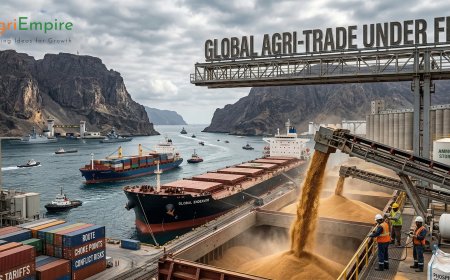
Israel and the Middle East: The conflict in Israel has severely impacted its horticulture sector, disrupting fruit and vegetable exports to Europe. Furthermore, attacks on shipping in the Red Sea have led to a surge in international freight rates, the impact of which is trickling down to consumers worldwide.