

























Pea Market Pivot: Russia Outpaces Canada in China’s Supply Chain Amid Ongoing Tariff Volatility
Russia has solidified its position as the leading pea supplier to China, capturing 46% of the market as Canadian imports dropped by 60% due to trade confrontations. While Canada and China preliminarily agreed to remove tariffs on March 1, 2026, Russian price competitiveness remains a major barrier for North American exporters.

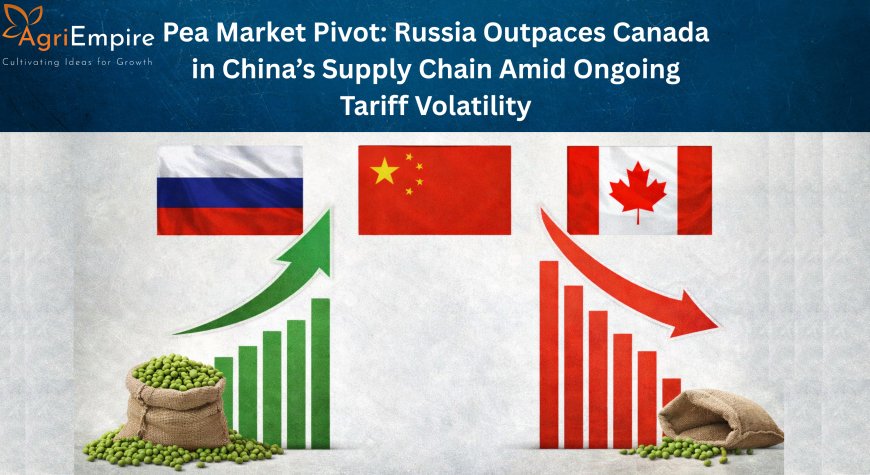
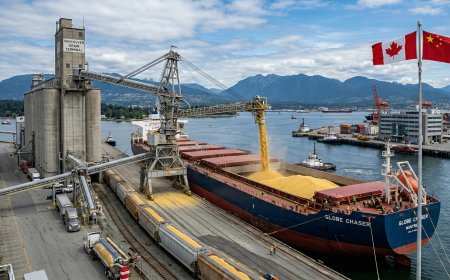
The global pulse trade is witnessing a dramatic power shift as Russia officially overtakes Canada as the primary provider of peas to the Chinese market. This transition was accelerated by a 100% tariff imposed by China on Canadian agricultural products in early 2025, which decimated Canada's market share. In 2024, Canada accounted for 42% of China's pea imports, but that figure plummeted by nearly 60% in 2025, allowing Russian exporters to surge forward and capture 46% of total Chinese pea imports.
Russia's dominance is backed by a massive production spike, with its 2025 pea harvest reaching a record 5.2 million tonnes—a 40% increase over the previous year. This bumper crop has allowed Russian suppliers to offer extremely competitive prices. Currently, Russian peas are being offered at approximately $252/tonne CFR, significantly lower than the $455/tonne quoted by Canadian exporters. This price gap has made Russia the preferred partner for Chinese buyers, despite a preliminary agreement between Ottawa and Beijing to remove tariffs starting March 1, 2026.
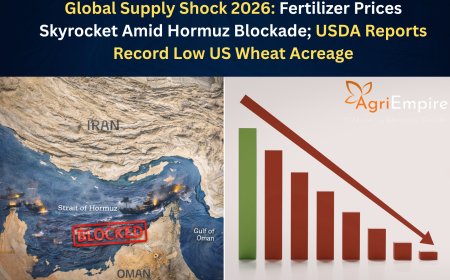
The broader geopolitical landscape is further complicating international trade. The U.S. has implemented a series of new tariffs, including a 15% duty on U.S.-origin corn and wheat shipped to China, effective as of March 2026. Concurrently, Canada is facing a 10% U.S. tariff on energy resources and potash, as well as a threatened 35% secondary tariff on other products, which could disrupt the North American agricultural supply chain.
In the grain sector, early production prospects for 2026 suggest a potential 3% decline in global wheat output, estimated at 810 million tonnes. This is largely due to softer crop prices prompting farmers in the U.S. and Russia to cut back on planted areas in favor of more profitable oilseeds. In contrast, India is expecting a favorable wheat harvest, supported by record sowings and government incentives, potentially matching last year's all-time highs.
As nations realign their trade strategies, food security has become an integral part of national defense. China has vowed to further diversify its agricultural sources and expand imports of advanced agritech to reduce vulnerability to external trade shocks. For global pulse and grain markets, the remainder of 2026 will be defined by whether traditional exporters like Canada can regain their footing against the low-cost dominance of Russian agricultural commodities.