












Jowar Arrivals Surge in Ahilyanagar: High-Quality FAQ Sorghum Fetches Up to ₹5,500 per Quintal
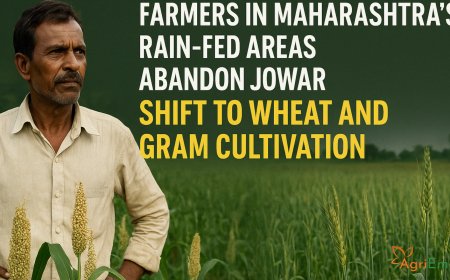
The Dada Patil Shelke APMC in Ahilyanagar is seeing a steady increase in Rabi Jowar arrivals, with daily volumes reaching 200 to 300 quintals. While FAQ (Fair Average Quality) grade Jowar is commanding strong rates up to ₹5,500, Non-FAQ varieties are trading at an average of ₹2,800 per quintal.

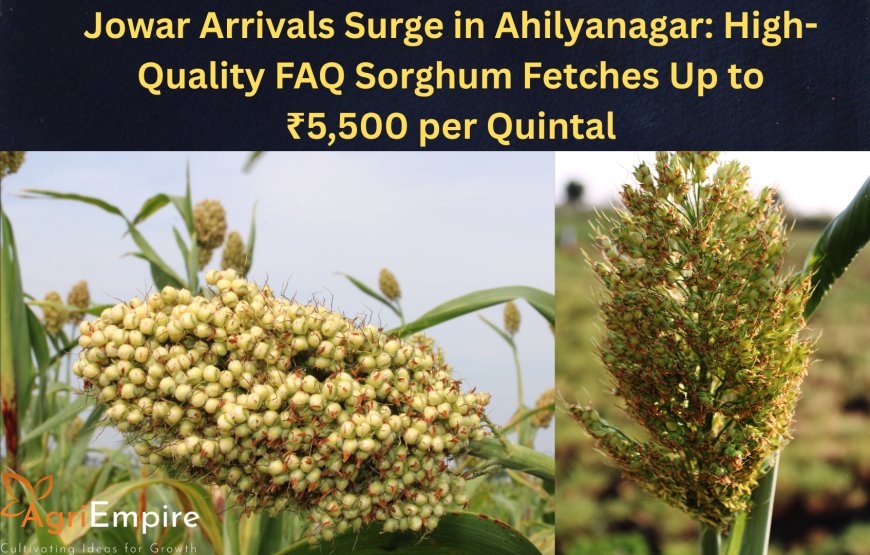
The arrival of Rabi Jowar is picking up momentum at the Dada Patil Shelke Agriculture Produce Market Committee (APMC) in Ahilyanagar as of April 11, 2026. With the harvesting season almost complete in the region, daily arrivals have stabilized between 200 to 300 quintals. The market is currently categorizing the produce into two grades—FAQ (Fair Average Quality) and Non-FAQ—with a wide price gap reflecting the difference in grain quality.
For high-quality FAQ Jowar, the rates have been impressively strong. On Thursday, April 9, FAQ arrivals of about 100 quintals fetched between ₹3,800 and ₹5,000, with an average of ₹4,000 per quintal. Earlier in the week, on Saturday, April 4, peak rates for superior quality lots even reached ₹5,500 per quintal. In contrast, the Non-FAQ grade, which sees higher daily volumes (around 170-192 quintals), is trading between ₹2,000 and ₹3,500, averaging around ₹2,600 to ₹2,800.
The influx of Jowar is not limited to local produce from Jamkhed and other parts of Ahilyanagar district. Significant quantities are also arriving from neighboring districts like Solapur, Beed, Chhatrapati Sambhajinagar, and Pune. Traders at the APMC noted that despite the increasing supply, Ahilyanagar continues to offer better rates compared to other regional markets, attracting farmers from across Western Maharashtra and Marathwada.
Market experts predict that the arrivals will peak in the next 15 days as the remaining stock from the Rabi harvest reaches the yards. While the premium "Dadar" variety continues to hold its value for direct consumption, the overall market trend suggests stable pricing for farmers who have brought well-cleaned and dried produce. The APMC administration has ensured that open auctions are conducted efficiently to handle the rising volumes, providing a transparent platform for farmers to secure the best possible returns for their hard work.