






































Global Grain Realignment: Wheat Prices Drop Below $5.70 Amid Record Southern Harvests and New U.S. Trade Tariffs
International wheat markets face a sharp correction as record harvests from Argentina and Australia flood the market. Meanwhile, new 10%–15% U.S. import tariffs are stoking fears of a global trade war and retaliatory measures from major grain importers like China.


The global wheat market is experiencing a significant price retreat today, March 4, 2026, as futures fell below the $5.70 per bushel mark. This cooling comes after a period of intense speculation that drove prices to a one-year high just weeks ago. The primary driver for this downward trend is the massive influx of physical supply from the Southern Hemisphere. Argentina is currently shipping a record-breaking 27.7 million-ton harvest, while Australia has significantly boosted its export forecasts following an exceptionally wet and productive growing season.
Compounding the pressure on prices is the strengthening of the U.S. dollar, which has made American agricultural exports increasingly expensive for international buyers. However, the most disruptive factor currently being analyzed by economists is the implementation of new U.S. global import tariffs. Under the current administration's policy, a general 10% tariff has been applied to most imports, with specific agricultural components facing levies as high as 15%. This protectionist shift is expected to increase the cost of imported farming machinery and fertilizers, potentially squeezing margins for domestic producers.
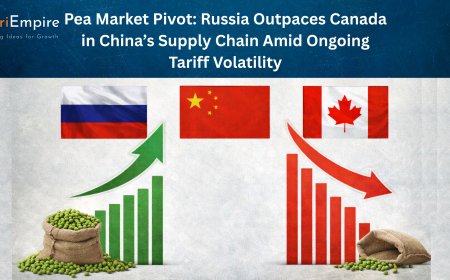
Geopolitical tensions are escalating in response to these trade barriers. China, the world's largest consumer of grains, is widely expected to retaliate by targeting U.S. soybean and corn exports. Beijing is currently finalizing its new Five-Year Plan, which reportedly places an unprecedented emphasis on total food self-sufficiency. This includes fast-tracking the adoption of genetically modified (GM) crops and diversifying its supplier base to include more South American and Russian sources, effectively bypassing the U.S. market wherever possible.
In Europe and the Middle East, the ripple effects are being felt through shifting supply chains. With U.S. wheat becoming a "residual supplier" due to high costs and tariffs, buyers in North Africa are turning heavily toward Russian and Black Sea grain. While Russia continues to navigate its own export quotas, the sheer volume of affordable grain coming out of the region is keeping global prices from rebounding in the short term. Traders are now bracing for a volatile spring as the market waits to see how the next round of diplomatic negotiations unfolds.
The broader outlook for 2026 suggests a move toward "Agricultural Regionalism," where trade deals are increasingly bilateral rather than global. As nations like Canada, China, and Russia form new trade blocks to counter U.S. tariffs, the traditional flow of global commodities is being permanently remapped. For farmers worldwide, this means that tracking local harvest data is no longer enough; they must now keep a constant eye on currency fluctuations and geopolitical policy shifts to survive in an increasingly fractured marketplace.