






















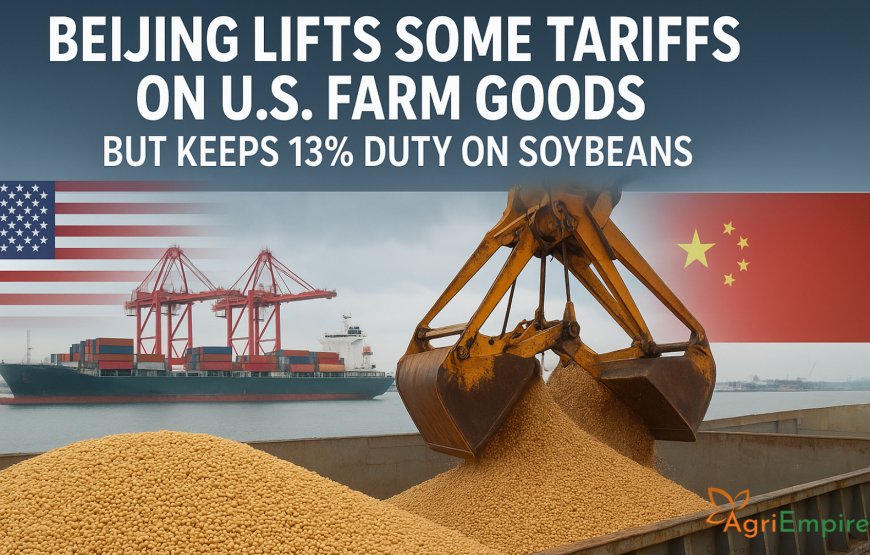
Beijing Lifts Some Tariffs on U.S. Farm Goods But Keeps 13 % Duty on Soybeans
Following a summit between Donald Trump and Xi Jinping, China has announced it will suspend certain retaliatory tariffs on U.S. agricultural goods starting November 10, 2025. However, it will retain a 13% tariff on U.S. soybeans—keeping U.S. exports disadvantaged versus cheaper Brazilian alternatives.

In a significant development for global agriculture and trade, China has announced that it will suspend a range of retaliatory tariffs on U.S. agricultural goods starting from November 10, 2025. The decision follows a high-level summit between the U.S. and China where agricultural trade featured prominently. While the tariff relief signals a thaw in bilateral farm-trade tensions, Chinese officials emphasise that key levies remain in place, which will limit any immediate turnaround.
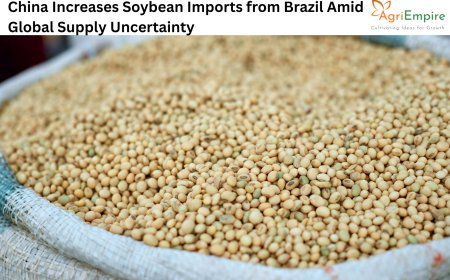
Specifically, the Chinese tariff commission stated that duties of up to 15% on certain U.S. agricultural goods will be removed, but crucially, a 13% combined tariff on U.S. soybeans will be retained. Analysts say that such a duty level makes U.S. soybeans commercially unviable compared with Brazilian alternatives, which are more cost-competitive in the Chinese market.
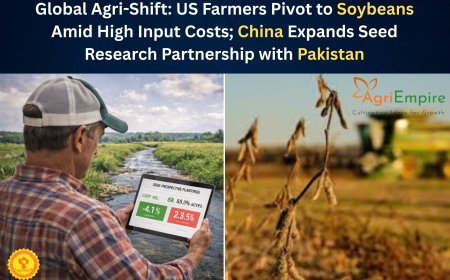
For U.S. farmers — particularly soybean growers — the announcement provides a hopeful sign but also underscores persistent barriers. The American Soybean Association and other farm groups welcome the measure, yet caution that meaningful export revival will need deeper tariff cuts and sustained purchasing commitments from China. The U.S. side has cited purchase targets (e.g., 12 million tonnes by end-2025 and 25 million annually thereafter) but Chinese authorities have not publicly confirmed those figures.
From the global market perspective, the move has already triggered optimism in futures markets. U.S. soybean futures climbed on the news, and traders are closely watching whether China will shift sourcing away from Brazil and Argentina back to the U.S. If so, global soybean flows and pricing may undergo a structural adjustment. Yet, many caution the retained U.S. tariff means the change may be more symbolic than substantive in the near term.
Looking ahead, trade policy specialists note this development may mark the beginning of a recalibrated farm-trade relationship between the two largest agricultural economies. However, much will depend on follow-through: firm purchase commitments, removal of non-tariff barriers, and transparency in sourcing. Until then, both U.S. and global farmers, as well as commodity markets, remain in a state of cautious anticipation.