















Market Crash in Khandesh: Banana and Watermelon Prices Plummet to Record Lows Amid Middle East Conflict
Farmers in the Khandesh region are facing a severe financial crisis as wholesale prices for Banana and Watermelon have crashed by over 70% in March 2026. While Banana prices dropped from ₹2,200 to just ₹400-₹700 per quintal, Watermelon rates have tanked to ₹4-₹7 per kg, leaving growers with massive losses.

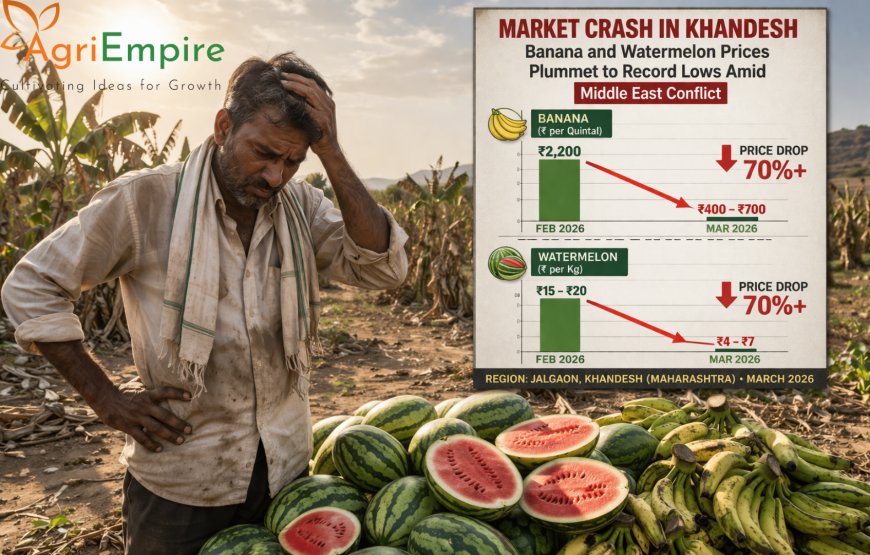
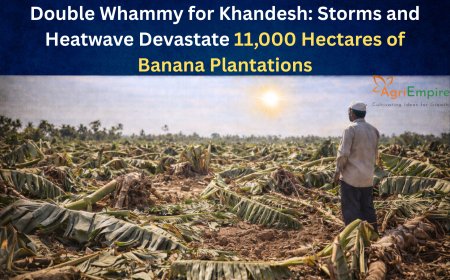
The agricultural economy of Khandesh is reeling under a dual blow of extreme summer heat and global geopolitical instability. As of March 28, 2026, wholesale prices for the region's signature crops—Banana and Watermelon—have entered a freefall. In direct farm-gate purchases, bananas are being bought for as low as ₹400 to ₹700 per quintal, a staggering drop from the ₹2,200 rates seen during the Mahashivratri festival in February. Similarly, watermelon rates, which stood at ₹20-₹22 per kg in mid-February, have now collapsed to just ₹4 to ₹7 per kg.
The primary catalyst for this crash is the conflict in West Asia that escalated in late February. While only 2-3% of Khandesh's summer bananas are directly exported to the Middle East, the sudden halt in these exports has disrupted the entire supply chain. Large buyers and trader lobbies are reportedly using the war as a pretext to depress local procurement rates, significantly increasing their own profit margins at the expense of struggling farmers.
Watermelon growers are particularly hard-hit, facing losses of approximately ₹40,000 to ₹45,000 per acre. The price decline began even before the Holi festival, despite lower-than-usual arrivals. As temperatures soar, the shelf life of these water-rich fruits decreases, forcing farmers to sell their produce at "throwaway prices" to avoid total spoilage. The mismatch between rising production costs—including fertilizers and irrigation—and falling market returns has made it impossible for farmers to break even.
In the banana sector, the north Indian markets, which absorb the bulk of Khandesh's produce, are also showing signs of saturation. The lack of cold storage infrastructure in districts like Jalgaon and Nandurbar leaves farmers with no choice but to accept the low rates offered by traders. Local farmer unions have expressed intense dissatisfaction, alleging that the "trader-buyer lobby" is artificially suppressing prices despite steady demand in urban centers.
As the peak summer season approaches, the farming community in Khandesh is calling for immediate government intervention. Without a stabilized export corridor or a minimum price support mechanism for perishable fruits, the current market volatility threatens to push thousands of horticulture farmers into a cycle of debt and despair.