





















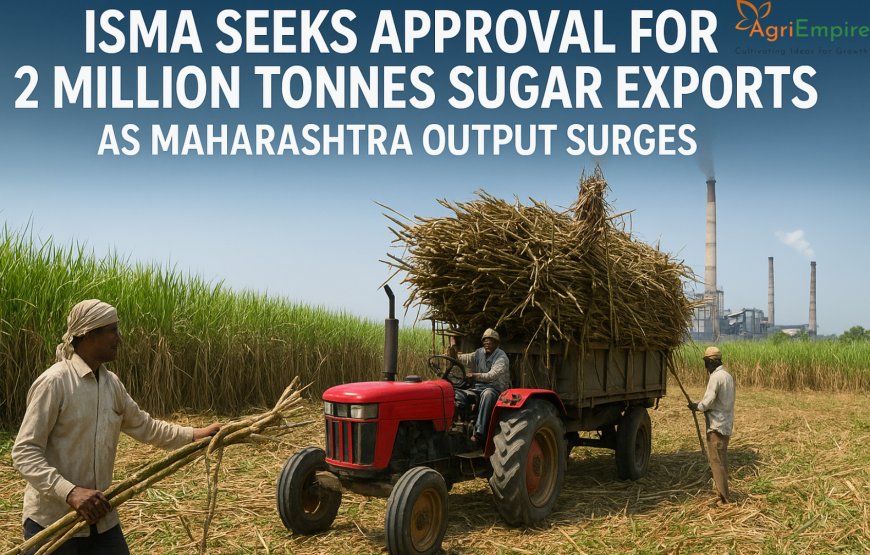
ISMA Seeks Approval for 2 Million Tonnes Sugar Exports as Maharashtra Output Surges
India’s sugar industry body ISMA has requested the central government to permit 2 million tonnes of sugar exports for the 2025–26 season, citing a 16% rise in sugar production driven mainly by Maharashtra and Karnataka’s bumper cane output.

India’s sugar industry has once again turned its focus to global markets as the Indian Sugar & Bio-energy Manufacturers’ Association (ISMA) has urged the central government to approve 2 million tonnes of sugar exports for the 2025–26 crushing season. The request is based on the industry’s internal estimates showing a significant 16% rise in production this year. Maharashtra and Karnataka, the two major sugar-producing states, have reported excellent cane availability after favourable monsoon patterns.
The increase in sugar output is largely attributed to improved farm practices, better irrigation coverage, and higher sucrose recovery levels across regions such as Kolhapur, Sangli, Solapur, and Ahmednagar. Maharashtra alone is expected to contribute a major share of this bump. Sugar mills in these regions have already prepared for early crushing cycles, anticipating higher volumes and smoother factory operations.
ISMA stated that due to surplus production, domestic sugar availability will remain comfortable throughout the marketing year, leaving room for safe export volumes. The association believes the export window will help stabilise the domestic market, prevent excessive stockpiling at mills, and ensure timely payments to sugarcane farmers — especially those dependent on faster mill turnaround for financial liquidity.
The decision around sugar exports is also closely tied to India’s ethanol production and blending programme. With more sugarcane being diverted toward ethanol manufacturing, the government has to balance sugar availability between consumption, industry needs, and renewable energy commitments. ISMA emphasised that even with ethanol diversion, India will still have ample sugar for the domestic market.
Farmers in Maharashtra have welcomed ISMA’s proposal, as sugar exports often help mills generate better revenue, which then translates to timely FRP payments. Experts also believe that the international sugar market conditions are currently favourable for Indian exports. The final call now lies with the central government, which is expected to evaluate global demand, domestic availability, and price stability before issuing an export notification.