



















Maha Farmers Lose Up to ₹40,000 Crore to Wild Animals; Receive Barely 1% Relief: GIPE Study
A study by GIPE’s Centre for Sustainable Development reveals that Maharashtra farmers suffer annual losses of ₹10,000–₹40,000 crore due to crop damage from wild animals like pigs, monkeys, and nilgai. Yet, compensation covers less than 2%, pointing to urgent need for reform and better relief mechanisms.

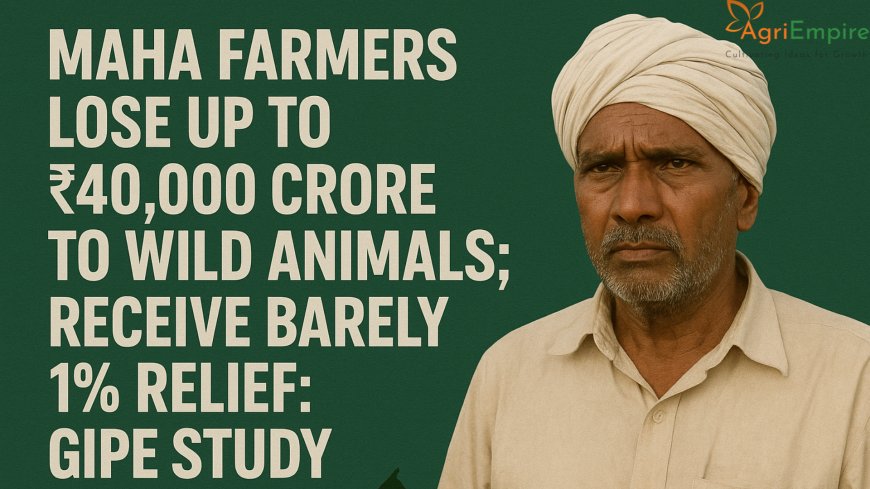
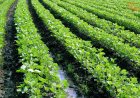
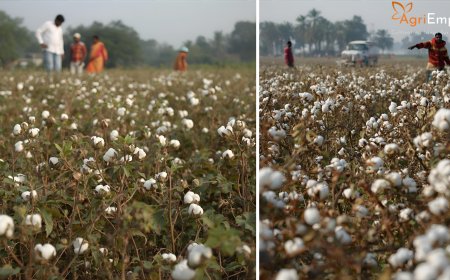
A recent study by the Centre for Sustainable Development at the Gokhale Institute of Politics and Economics (GIPE), Pune, reveals alarming levels of crop damage inflicted by wild herbivore animals in Maharashtra. Annual losses are estimated between ₹10,000 crore to ₹40,000 crore, with the Konkan region bearing the worst brunt. Wildlife such as wild pigs, monkeys, nilgai, gaur, blackbucks, and elephants regularly raid farms, damaging not just harvests but also forcing shifts in cropping patterns among farmers.
The study, which surveyed around 1,200 farmers across different agro-regions in Maharashtra, found that 54% of farmers have stopped cultivating certain crops entirely due to persistent wildlife interference. Another 64% have reduced their farming area, citing high costs and labor involved in guarding fields. Such changes reflect not only physical losses but also a long-term decline in agricultural potential and food production.
On average, losses amount to ₹27,000 per hectare annually. Yet, the relief/compensation that farmers receive is shockingly low—less than 1-2% of recorded losses. The bureaucratic red tape, lack of awareness among farmers about compensation laws, delays in the claims process, and poorly staffed forest/agriculture/forest-department field staff further aggravate the situation. Many farmers do not even file claims because the process itself is time-consuming and complex.
The impacts extend beyond visible crop damage. There are indirect costs: extra labour for guarding, setting up fences, opportunity costs when fields are left unplanted or under-cultivated, and psychological stress. In regions close to forests—such as Konkan, Vidarbha, and Sahyadri—the study noted localized patterns, with monkeys causing crop loss in Konkan, nilgai being more problematic in Vidarbha, and wild boars universally a widespread issue.
The authors of the GIPE study suggest urgent reforms: a farmer-friendly, transparent, and timely compensation mechanism; incentives for conservation-compatible practices (such as protective fencing, wildlife-proof barriers); awareness campaigns; and stronger law implementation. Without such changes, small and marginal farmers may further abandon crops, leading to food insecurity, loss of income, and increased rural migration.